

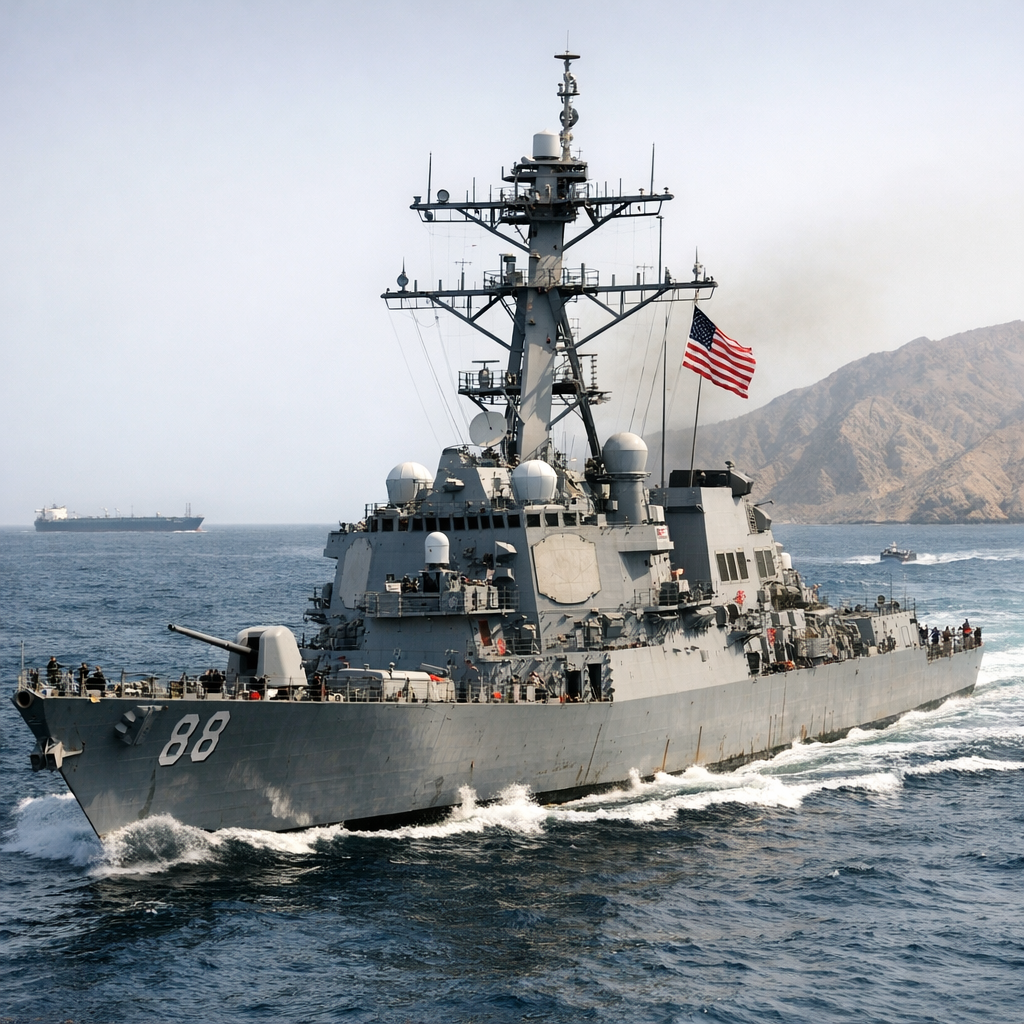
The Strait of Hormuz, a narrow passage connecting the Persian Gulf to the Arabian Sea, has recently become a focal point of international tension. This strategic waterway is vital for global oil transportation, with approximately 20% of the world’s petroleum passing through it daily.
Recent Developments
In early May 2026, reports emerged of escalating confrontations between the United States and Iran in the Strait of Hormuz. These incidents have raised concerns about the stability of the region and the security of global energy supplies. Analysts suggest that the U.S. aims to contain Iran’s influence, while Iran views control over the strait as a strategic advantage.
Potential Implications for the U.S.
The heightened tensions in the Strait of Hormuz could have several repercussions for the United States:
- Energy Prices: Disruptions in oil shipments may lead to increased fuel prices domestically, affecting consumers and businesses alike.
- Economic Impact: Higher energy costs can contribute to inflationary pressures, influencing the broader economy.
- Military Engagement: Continued confrontations might necessitate increased U.S. military presence in the region, impacting defense budgets and international relations.
Local Perspective
For residents of Minturn, Colorado, the ripple effects of international events like the Strait of Hormuz crisis may seem distant. However, potential increases in fuel prices could affect daily commuting costs, heating expenses, and the overall cost of goods and services. Staying informed about such global developments is essential, as they can indirectly influence our local economy and daily lives.
As the situation unfolds, it is crucial to monitor official statements and reliable news sources to understand the evolving dynamics and prepare for any potential impacts.